How I Design My 'Please Don't Buy Me This' List Every December
Former Muji designer Lena Norwood shares her yearly practice of creating a "Please Don't Buy Me This" list — and why it's the kindest gift she gives her family.
It started as a survival tactic.
A few years into my minimalist life, I realized my family was suffering. Not because they didn't love me — because they did, too much. Every December, they'd panic. What do you get the person who designs things for a living? The person who has edited her life down to 33 items? The person who spends her days asking whether objects deserve to exist?
They'd show up with armfuls of beautifully wrapped things I didn't need. And I'd smile, say thank you, and feel the weight of their love sitting on my shelf, unopened.
So I did something that felt almost rude at the time.
I made a list.
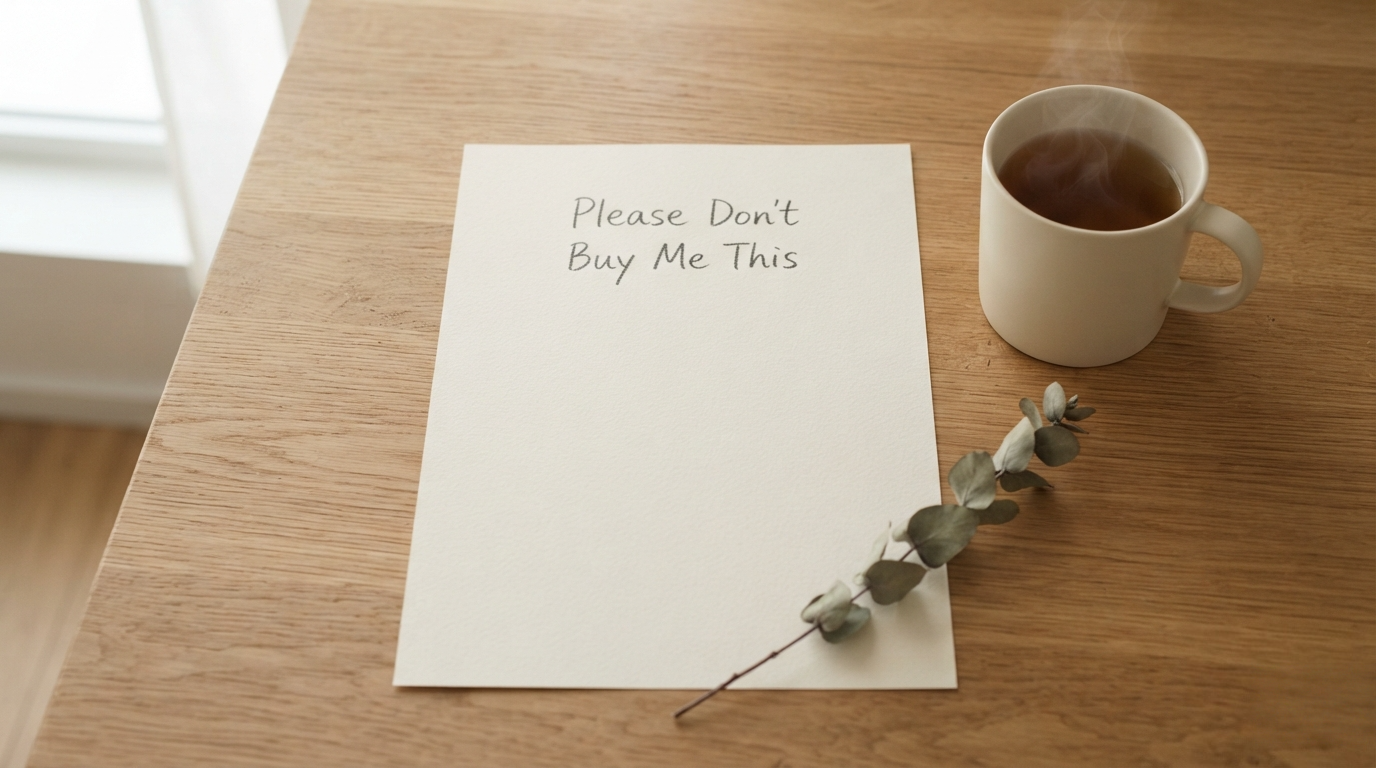
Not a wishlist. The opposite. A list of things I didn't want — and a gentle explanation of why.
The First Year Was Awkward
I sent that first PDF to my immediate family with a note that said: "I love you. I know you're trying. This might help."
The silence was loud. I worried I'd offended them. I worried I'd broken some unwritten rule of gift-giving — that you're supposed to be grateful, not prescriptive.
But then my sister called. She sounded relieved. She said: "I've been stressed about this for weeks. Thank you for telling me."
That's when I realized: my family wasn't offended. They were liberated.
How I Build the List Each Year
December is when I sit down with a notebook and a cup of tea and build that year's list. It's not a long process — maybe an hour. But it's intentional.
Step One: Take Stock of the Year
I look back at the past twelve months. What have I acquired? What have I let go of? What's changed? The list isn't about what I don't want — it's about who I am right now. A gift that would have thrilled me five years ago might feel wrong today.
Step Two: Identify the Temptations
I think about the categories my family reaches for most often. Another mug. Another candle. Another scarf. Those are the classics. I tell them, gently, that I'm full on mugs. That I already have my signature scent. That my closet has exactly what it needs.
Step Three: Offer Alternatives
Here's the key: I never just say "don't buy this." I say "instead, consider this." I offer intentional gifts — a specific experience, a donation to a cause I care about, or the ultimate luxury: nothing.
I tell them: "If you want to give me something, give me an afternoon. Give me a photo of you. Give me a story I haven't heard. Give me permission to just be with you."
Step Four: Write It With Love
The tone matters more than the content. If the list sounds like a demand, it will land like a rejection. I write it like a letter: grateful, warm, and honest. I tell them I love their generosity. I tell them I'm not rejecting their gifts — I'm inviting them to give differently.
What Happens Next
Every year, something beautiful happens.
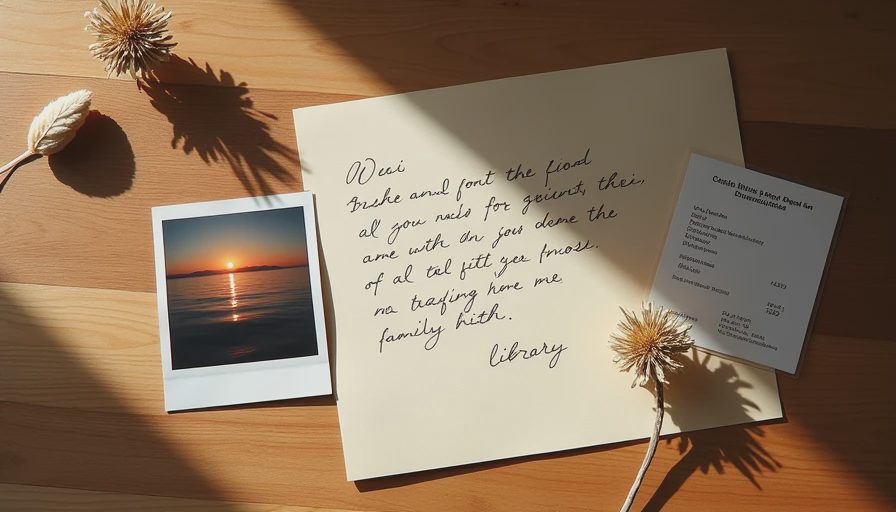
My mom sends me a photo of a sunrise she watched, thinking of me. My dad makes a donation to the local library in my name. My sister mails me a handwritten letter — not a thing, just her words.
And I keep every single one.
The meaningful gifts that aren't things have become our family tradition. We give less. We mean more.
I still send that PDF every December. And every year, someone new asks for a copy. Friends. Colleagues. Readers. People who are tired of the dance, tired of the guilt, tired of watching beautiful things go unused.
So here's what I tell them: start small. Send it to one person. See how it lands.
You might be surprised.
Because the kindest gift you can give a minimalist isn't a thing. It's the permission to not give one.
Give less. Mean more.
Comments
No comments yet — be the first to share a thought.