The Maker's Shelf: Hand-Dyed Linen Napkins From a Studio in Vermont
A former Muji designer discovers hand-dyed linen napkins from a Vermont studio — and learns that the best gifts aren't perfect. They're honest.
I found them on a gray November afternoon.
I'd driven up to Vermont for a weekend away, no agenda, just the need to be somewhere quieter than Portland. I was wandering through a small town, the kind with one main street and a general store that sells everything from maple syrup to wool socks.
And then I walked into a studio that stopped me cold.
The door was propped open. Inside, a woman was standing at a wooden table, surrounded by lengths of fabric in colors I didn't have names for. Not blue, exactly. Not gray. Not green. Something that lived between all of them. The kind of color that makes you realize how many colors you've never seen.
She was dipping linen into a vat of dye, pulling it out slowly, watching the color take.
I stood in the doorway for a long time before I spoke.
The Color That Took a Year
Her name is Sarah. She's been dyeing fabric for seventeen years.
The color on the linen wasn't a formula. It wasn't a recipe she'd perfected. It was a process she'd been learning for more than a decade — a combination of indigo, iron, and something she called "the patience to let the fabric tell you what it wants."
She told me she'd spent a full year getting this particular shade right. Not full-time — she had other work, other colors to develop. But she'd go back to it, season after season, adjusting the ratio, the temperature, the length of the dip.
One year. For a color that most people wouldn't even notice.
That's when I understood: handmade gifts aren't just made by hand. They're made by attention. Attention that doesn't clock out at 5 p.m. Attention that returns, again and again, to the same problem, until it yields.
The Fabric That Remembers
Linen is a strange material. It's not soft like cotton. It's not smooth like silk. It's a little rough, a little uneven, a little stubborn.
But it remembers.
The more you use it, the better it gets. It softens with washing. It takes on the gentle creases of daily life. It becomes a record of the meals it's witnessed, the hands that have touched it.
Sarah's napkins don't arrive perfect. They arrive honest. The color isn't uniform — it shifts from one side to the other, a gradient of the dip. The edges are slightly frayed where she cut them. The stitching is visible, not hidden.
These are not small-batch handmade gifts that are trying to look like they came from a factory. They're not pretending. They're showing you exactly what they are: the work of one pair of hands, over days, weeks, years.
What a Napkin Can Carry
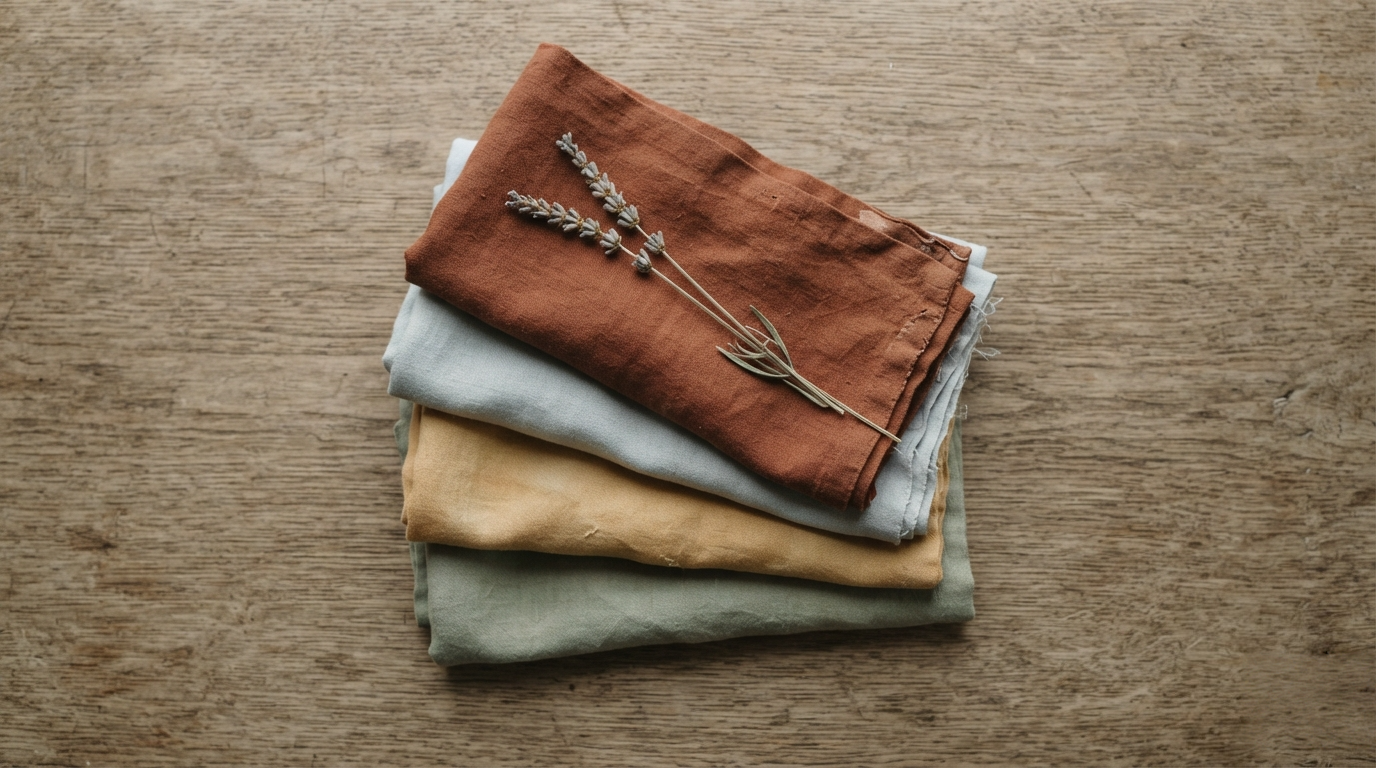
I bought four napkins. One in that color I couldn't name. Three in variations I could: a pale gray, a deep rust, a soft ochre.
I didn't buy them because I needed napkins. I bought them because they felt like they were already part of my life.
When I use them now, I think about Sarah's studio. The wood table. The vat of dye. The window that looked out onto a Vermont hillside. I think about the year she spent on that one shade of blue-gray.
They've become part of my rhythm. They're on the table when we have friends over. They're folded in a drawer when we don't. They hold stains from meals I've forgotten. They remind me that gifts for someone who has everything don't need to be rare. They need to be real.
The Gift of Slowness
I gave one of the napkins to my sister for her birthday.
She opened it, held it, looked at me. She said: "This feels different."
I told her about Sarah. About the year. About the fabric that remembers. She nodded, folded it carefully, and put it in her bag.
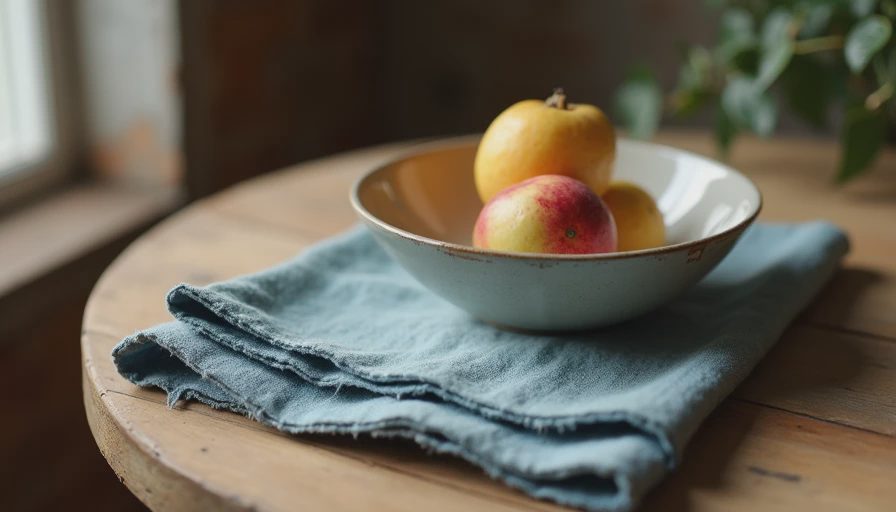
A few weeks later, she sent me a photo. The napkin was on her table, under a bowl of fruit. She wrote: "I use it every day. It makes everything feel slower."
That's the gift. Not the napkin. The slowness.
Handmade linen gifts like Sarah's aren't just objects. They're permission to slow down. Permission to pay attention. Permission to eat a meal without rushing.
Sarah doesn't make a lot of napkins. She doesn't want to. She makes what she can, when she can, as well as she can. And that's exactly why they matter.
Give less. Mean more.
Comments
No comments yet — be the first to share a thought.