A Wooden Spatula David Would Approve Of
A former Muji designer brings home a handmade cherry wood spatula from a Maine maker — and earns the quiet approval of her woodworker husband.
David is not easy to impress.
He's a woodworker. He's been shaping wood for twenty years. He knows the grain of maple, the weight of walnut, the way cherry darkens with age. He can look at a piece of furniture and tell you not just what it's made of, but who made it, how long it took, and whether the joinery is honest or hiding something.
So when I brought home a wooden spatula from a maker in coastal Maine, I didn't expect much.
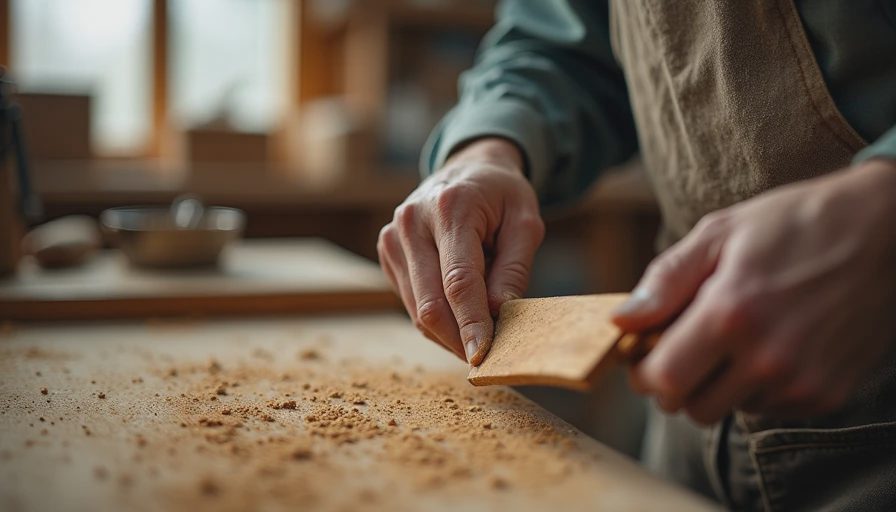
I'd found it at a small craft fair on a rainy Sunday. The maker was a woman named Eliza, who'd been carving spoons and spatulas for eight years. She worked out of a tiny studio behind her house, using only hand tools and locally sourced wood.
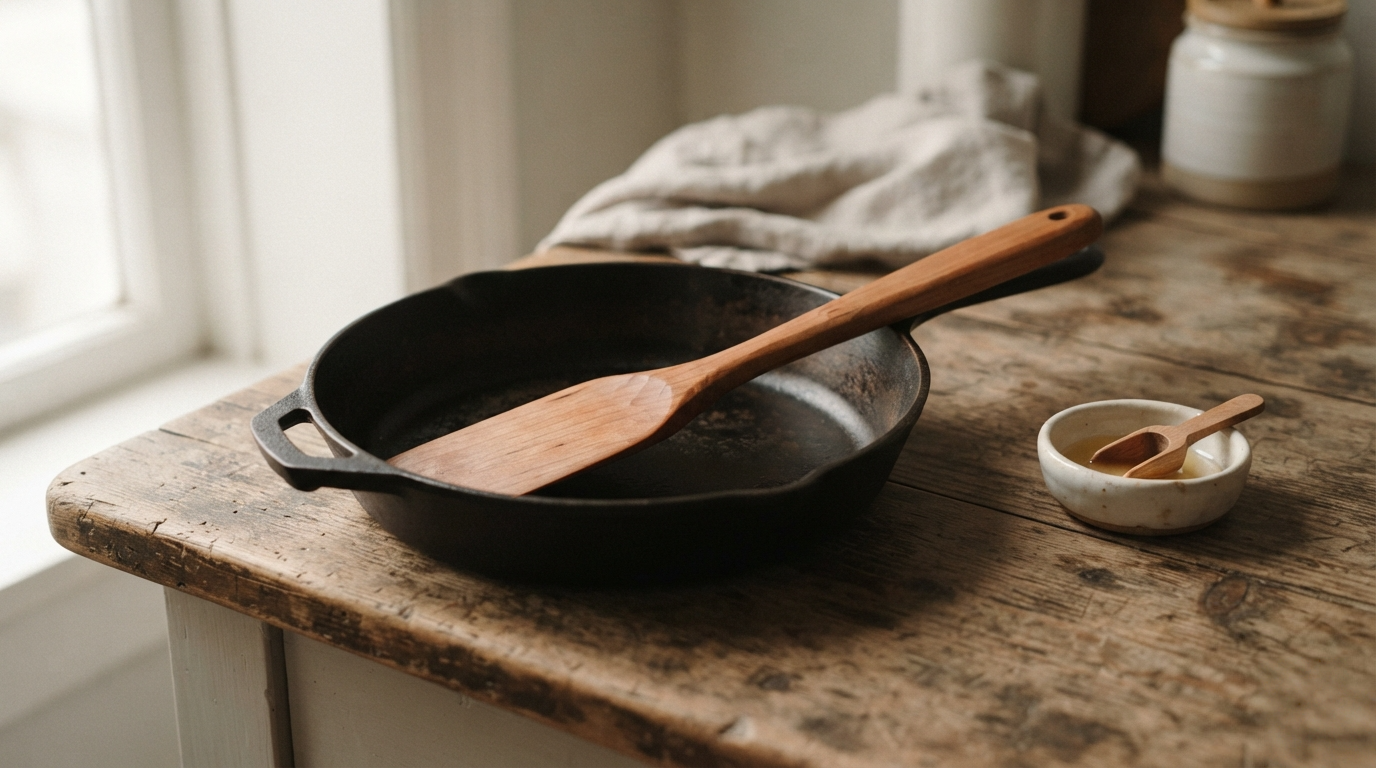
Her spatula was simple. Unassuming. One piece of cherry wood, shaped by hand, sanded smooth, finished with a blend of beeswax and mineral oil.
David picked it up. He turned it over. He ran his thumb along the edge. He was quiet for a long time.
And then he said: "This is the best spatula I've ever held."
The Hands Behind the Tool
That's not nothing. David has held a lot of spatulas.
He told me later what he noticed. The balance was perfect — the handle was slightly weighted toward the base, so it rested naturally in your hand. The edge was thin enough to slide under anything, but not so thin it would break. The curve was just right for a cast-iron pan.
None of that was accidental. Eliza had designed it through years of use. She'd made hundreds of spatulas, watched how people held them, listened to what they complained about. She'd refined the shape over time, not through sketches and prototypes, but through feedback from actual kitchens.
That's what David calls "honest design." Not design that looks good in a showroom. Design that earns its place in a drawer.
This is what I mean by handmade gifts that are worth giving. Not because they're exclusive or expensive, but because the maker has done the work of understanding how the object will be used.
The Difference Between Wood and Plastic
Most kitchen tools are made of plastic or silicone. They're cheap, they're durable, and they do the job.
But they're also replaceable. Disposable. They don't ask you to care about them.
A well-made wooden spatula is different. It's responsive — it warms to your hand. It ages beautifully, developing a patina from the oils in your cooking. It's lighter than metal, gentler on your pans, and quiet in a way that matters when you're cooking late at night.
But more than that, it asks something of you. You wash it by hand, not in the dishwasher. You oil it occasionally. You treat it like it matters. Because it does.
Handmade wooden kitchen gifts like Eliza's spatula aren't just tools. They're companions. They're reminders that the things we use every day deserve to be well-made.
The Spatula We Keep Reaching For
Six months later, that spatula is still in our kitchen.
We reach for it more than any other utensil. It's the one David uses for eggs. It's the one I use for pancakes. It's the one we both reach for without thinking.
I've watched David with it. He handles it carefully — not with the fear of breaking it, but with the care of something he respects. He dries it immediately after washing. He oils it every few weeks. He treats it the way he treats his own work.
That's the difference between a tool and a gift. A tool gets used. A gift gets used and valued, at the same time.
Small-batch handmade gifts like this spatula don't try to be everything. They just try to be one thing, done really well. And that's exactly what makes them worth keeping.
When a Tool Becomes a Gift
I asked Eliza once if she ever gets tired of making the same thing over and over.
She said: "Every spatula is the same, and every spatula is different. The shape is the same. The technique is the same. But the wood is always different. The grain is never what you expect. You adjust. You listen. You let the wood tell you what it wants."
That's the gift. Not the spatula. The attention.
David was right to approve. Not because Eliza is a great woodworker — she is — but because she treats wood the way David does. With curiosity. With patience. With the understanding that the best things take time.
The spatula lives in a jar by the stove. We see it every day. We use it every week. And every time I pick it up, I think about Eliza's hands, the rainy Sunday, and the quiet approval of the woodworker I married.
That's more than a tool.
That's a gift worth giving.
Give less. Mean more.
Comments
No comments yet — be the first to share a thought.