A Ceramic Mug That Took Three Months to Fire
A former Muji designer discovers a ceramic mug that took three months to fire. A story about slowness, presence, and why handmade gifts are worth the wait.
I first saw it on a rainy Saturday in October.
I was visiting a ceramics studio in the hills outside Portland, a place I'd been meaning to explore for months. The studio was warm, quiet, filled with the smell of wet clay and wood ash. Shelves lined the walls, crowded with vessels in various stages of completion — some still raw, some glazed, some waiting for their final firing.
And then I saw it.
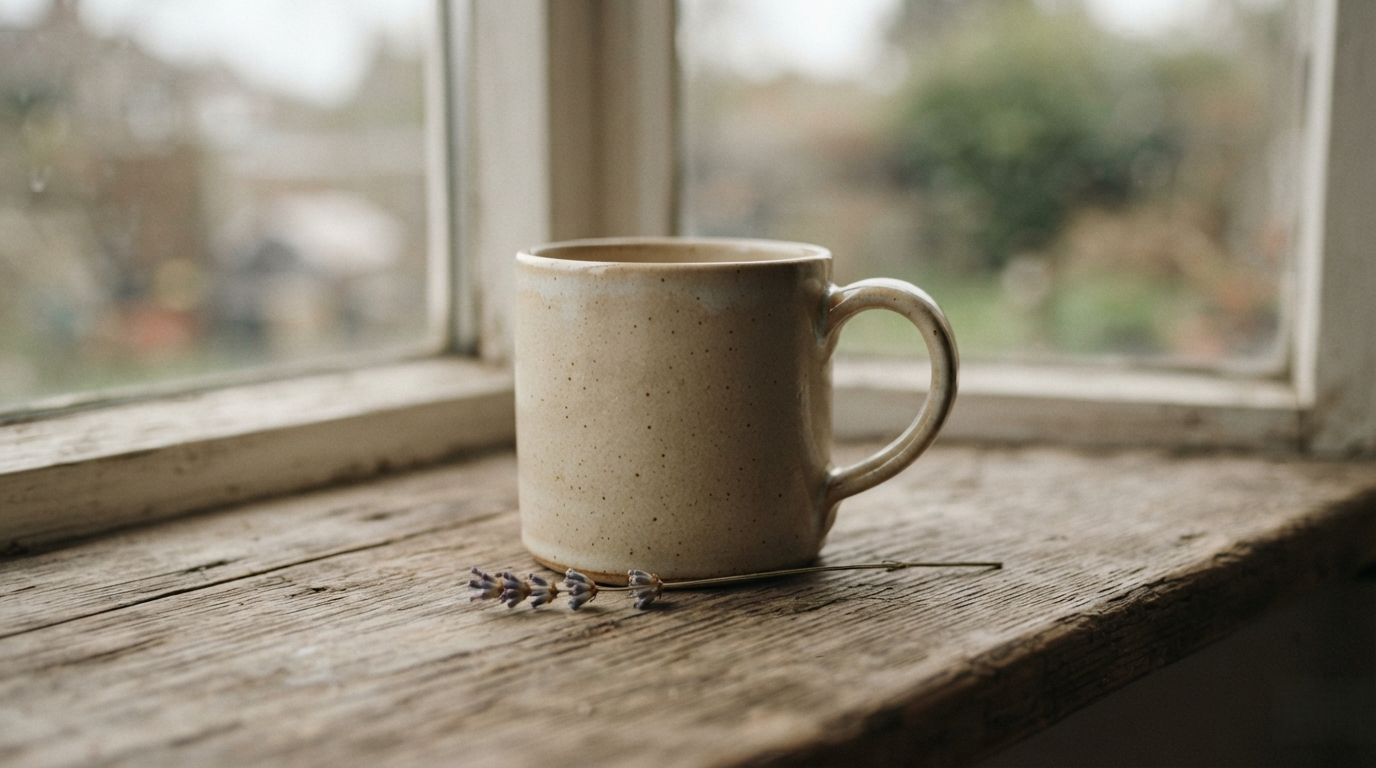
A single mug, sitting alone on a high shelf. It was unassuming. Smallish. A pale clay body with a subtle glaze that caught the light in a way I couldn't quite describe. Not shiny. Not matte. Something in between. Something that made me want to hold it.
I picked it up. It was heavier than I expected.
I asked the potter about it. She smiled and said: "That one took three months to fire."
The Reason for the Wait
I assumed she was exaggerating. Three months for a single mug? Even the most meticulous ceramics process — drying, bisque firing, glazing, glaze firing — rarely stretches beyond a few weeks.
But this mug was different.
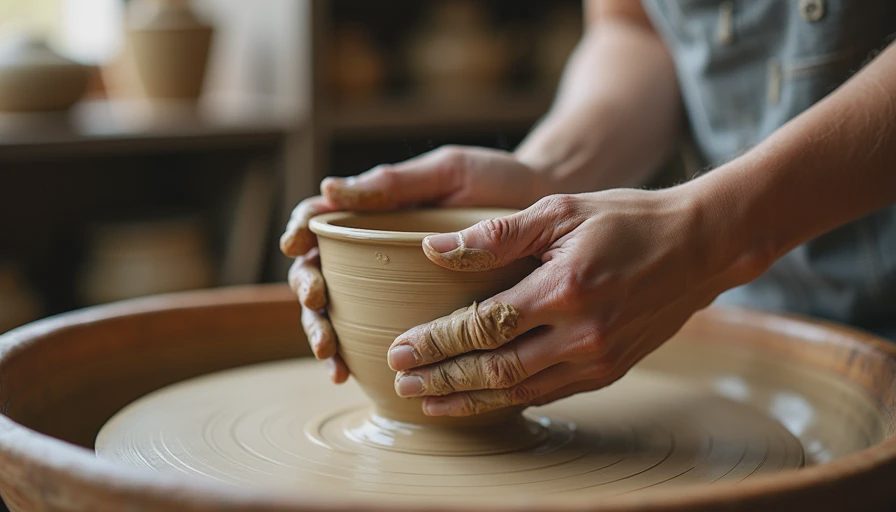
The clay was foraged from a local riverbed. She'd dug it herself, processed it by hand, spent weeks removing impurities and testing its plasticity. Then she'd thrown it on the wheel, trimmed it, let it dry slowly — too fast and it would crack.
The first firing was a disaster. The glaze didn't behave the way she'd hoped. So she ground it off, re-glazed it, and fired it again. And again. Each firing took days of cooling before she could see the result.
Three months. Not because she was slow. Because she refused to compromise.
Why Time Matters
When we buy a mass-produced mug, we're buying speed. A factory can produce thousands of identical vessels in the time it took this potter to dig the clay. The mug arrives in a box, goes on a shelf, and does its job.
But it doesn't carry anything beyond function.
This mug carries something else. It carries the potter's attention. It carries three months of patience. It carries the river where the clay was found, the wood that fed the kiln, the hands that shaped it and re-shaped it until it was right.
That's what I mean by handmade gifts. Not just objects made by hand. Objects that couldn't have been made any faster. Objects that insist on the value of slowness.
The Three Tests
At Muji, I used to ask every product three questions. Form, function, feeling. Most products pass two. The great ones pass all three.
This mug passed all three.
Form: It's beautiful. Not in a flashy way, but in the way that makes you want to keep looking at it. The glaze shifts from warm beige to soft gray depending on the light. The handle is perfectly balanced. It feels like it was designed by someone who held a thousand mugs before making this one.
Function: It holds coffee. It doesn't leak. It's comfortable to hold. It does everything a mug should do, without fuss.
Feeling: This is where the mug earns its place. When I hold it, I remember the potter. I remember the rain on that Saturday. I remember that some things are worth waiting for. A mug that makes you feel that way isn't a mug. It's a companion.
This is what I look for in gifts for someone who has everything — not rare objects, but objects with presence. Objects that carry a story. Objects that remind us of something we'd forgotten.
A Gift That Earns Its Place
I didn't buy the mug that day. I went back three weeks later and bought it. It was expensive. More than I'd ever paid for a mug. But I knew, in the way you know these things, that it would earn its place.
It sits on my kitchen windowsill now. Not in a cabinet. Not in a drawer. In the light, where I can see it every morning. I use it when I need to slow down. When I need to remember that not everything needs to be fast.
It's the only mug David has ever asked me not to put in the dishwasher. He treats it like it matters. Because it does.
Small-batch handmade gifts like this one aren't about the object itself. They're about what the object represents: that someone took the time. That someone cared. That someone believed the world needed one more good thing, made slowly.
That's the gift.
The mug is just the proof.
Give less. Mean more.
Comments
No comments yet — be the first to share a thought.