
Minimalist Clothing: How to Build a Closet That Feels Quiet and Useful
Minimalist clothing makes dressing easier: fewer pieces, better fabrics, and a calmer closet that still feels like you, season after season, at home daily.
Minimalist clothing is not about dressing like you do not care. It is about making getting dressed easier, cheaper over time, and calmer in the morning. After six years designing everyday goods at Muji, I learned that the best objects earn their place by disappearing into routine. Clothes should do the same. If your closet is full but your outfits still feel uncertain, you probably do not need more choice. You need fewer pieces that work on a tired Tuesday, not just on a good photo day.
Why minimalist clothing works when life feels crowded
I think of a small wardrobe as a system, not a sacrifice. Three tops and two bottoms already give you six outfits, and a jacket or sweater multiplies that again. The point is not to own less for its own sake. It is to make ordinary days move faster. When clothes are easy to combine, you spend less time negotiating with your closet and more time actually leaving the house.
In minimalist clothing, the point is not sameness. It is repeatability with enough variation to keep things alive. A white tee, a navy knit, straight jeans, and one clean blazer can cover work, errands, and dinner without feeling stiff. That is why I like to edit by function first: what do you wear on the busiest days, the wettest days, the days you are too tired to invent an outfit? Those are the clothes that deserve space.
Start with fabric, not ideology
When people hear minimalist style, they often picture a strict color palette before they think about touch and wear. I start with the fabric. A $24 cotton tee from Uniqlo is more useful than a fancier one if the collar stays flat and the fabric is not see-through. Merino from Icebreaker, linen from a brand like Everlane, or a dense cotton jersey can all earn a place if they feel good after repeated washing.
The trick is to stop buying the idea of restraint and start buying materials that hold up. Ponte pants, wool twill, denim with a little structure, and brushed knits all make life easier because they do not demand constant attention. Cheap fabric often creates hidden cost: pilling, sagging, shrinking, and the slow drip of replacements. A tight wardrobe only works when the pieces are durable enough to repeat.

Build a narrow palette that still feels alive
Color is where many closets drift into chaos. You do not need only black, white, and gray, but you do need a plan. I like one anchor neutral, one softer neutral, and one accent that feels like a person, not a trend. Navy, cream, and olive is one strong trio. So is charcoal, white, and faded blue. Once you choose that frame, shopping gets simpler because near-duplicates stand out immediately.
Shoes and outerwear matter here too. White sneakers, loafers, ankle boots, or one good coat can make plain clothes look finished. If you wear a lot of denim, let the wash guide your other blues. If black is your base, add texture so the outfit does not flatten out. A ribbed sweater, matte leather, or brushed wool gives depth without adding visual noise.
If you want one practical rule, use it here: buy the next piece only if it works with at least three things you already own. That rule is boring in the best way. It protects you from the almost-right shirt that looks fine alone and useless everywhere else. The result is not a monochrome closet. It is a closet that feels coherent.
Where minimalist clothing earns its keep
In minimalist clothing, the goal is not to buy less at any cost. It is to buy the few things that see real use. That is where the math changes. A $180 coat that works with everything is often cheaper over three winters than three $70 coats that never quite feel right. The same is true for trousers. A pair from COS, J.Crew, or Gap that fits cleanly at the waist and survives a long day does more than five almost-right pairs.
Spend first on outerwear, shoes, and the pants you reach for most. Then look at tees and base layers, where good cotton or modal makes the difference between polished and tired. Tailoring is worth its small cost too. A $20 hem or a $30 waist adjustment can turn a decent garment into the one you grab without thinking. That is the kind of spending that disappears into daily ease.
A real week in a small wardrobe
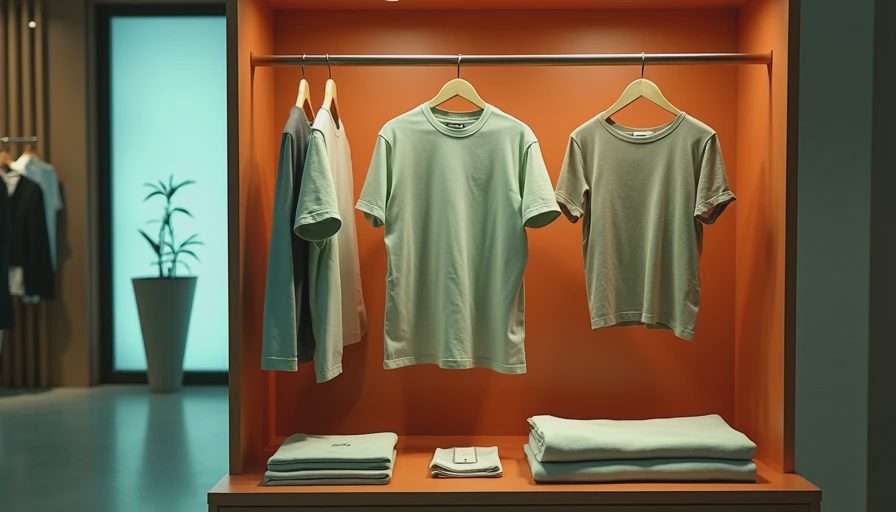
A small wardrobe works because it has memory. Monday can be straight jeans, a white tee, a navy cardigan, and loafers. Tuesday becomes the same jeans with a crisp shirt and sneakers. Thursday pulls in black trousers and a soft knit. Saturday is the sweatshirt you actually like, not the one you keep for yard work. Each outfit borrows from the last one, so getting dressed feels almost automatic.
That rhythm changes laundry too. When you wear your favorites often, you notice what fails first. Maybe the neckline stretches, maybe the cuff frays, maybe the fabric wrinkles in a way you hate. Those are not annoyances to ignore. They are clues. They tell you what is worth replacing and what should simply stay out of your cart.
When the closet gets too small
The biggest mistake is turning a small wardrobe into a uniform you do not enjoy. If every shirt is the same weight and every pant is the same cut, the closet can start to feel flat. Add one striped shirt, one textured knit, or one piece with a little drape. That is enough to make the wardrobe feel human again without undoing the edit.
If minimalist clothing starts feeling severe, the fix is usually not more shopping. It is a better mix. Keep the pieces that work hard, fit well, and feel good on an ordinary day. Let the rest go without drama, and replace only what solves a real problem. That is the whole promise of a quieter closet: less confusion, more use, and more room to breathe. Give less. Mean more.
Comments
No comments yet — be the first to share a thought.