
Wabi sabi home decor: A quieter way to make a room feel lived in
Wabi sabi home decor creates a quieter room through natural materials, useful objects, and honest imperfection. Learn what to choose, edit, and keep for years.
Wabi sabi home decor begins with a small relief: your home does not have to look untouched to be beautiful. A faint mark on a wooden table, a handmade cup with an uneven rim, or linen that has softened through washing can make a room feel more human. This is not a decorating style that asks you to buy a complete collection. It asks you to notice what already has a life.
I came to this idea after years of designing daily objects and removing everything that did not earn its place. The most lasting rooms are rarely the ones with the most coordinated accessories. They are the rooms where each object is useful, familiar, and allowed to age. Give less. Mean more.
What wabi sabi means at home
Wabi sabi is often described through ideas of imperfection, impermanence, and simplicity. In a home, that does not mean making a room gloomy or deliberately unfinished. It means choosing materials that show time honestly and arranging them with restraint.
Think of a hand-thrown ceramic bowl rather than a set of identical decorative bowls. Think of an oak stool with visible grain rather than a glossy surface that hides every variation. A room can still be comfortable, colorful, and personal. The difference is that its beauty does not depend on everything being new or perfectly matched.
Wabi sabi home decor also leaves room for use. A blanket belongs on the arm of a chair because someone reaches for it, not because it completes a styled photograph. A cutting board can hang where it is easy to grab. Books can lean slightly. A vase can hold grocery-store flowers, one branch from a walk, or nothing at all.
Start by looking for evidence of daily life. Which objects do you touch every morning? Which ones have become more attractive as they aged? Those are better guides than a shopping list.

Materials that make a room feel grounded
Natural materials are a useful starting point because they carry texture without requiring visual noise. Wood, linen, wool, clay, stone, paper, rattan, and aged metal each change subtly with handling and light. You do not need all of them. Two or three materials repeated calmly will usually feel more considered than ten competing finishes.
For a living room, try one substantial wood element, such as a low table or open shelf, with a linen cushion and a wool throw. In a bedroom, cotton bedding, a paper lantern, and a simple ceramic vessel can create softness without decoration covering every surface. In a kitchen, a wooden spoon, stoneware mug, and cotton towel are enough to bring warmth to a practical space.
Pay attention to touch as much as color. A matte ceramic mug often feels more inviting than a perfectly polished one. A washed linen curtain catches daylight differently from synthetic fabric. These details are quiet, but quiet is not the same as empty.
If your budget is limited, change the materials before changing the furniture. A $25 linen-blend pillow cover, a secondhand wooden tray, or a small handmade bowl can shift the atmosphere more effectively than a cart full of accessories. Wabi sabi home decor is less about price than about choosing fewer things with a visible point of view.
How to edit a room without making it cold
Minimalism can become severe when every personal trace is removed. The goal here is not a showroom. It is a room with breathing space and a memory or two.
Begin with one surface: a coffee table, dresser, or kitchen counter. Remove everything, then return only what you use or genuinely enjoy seeing. A useful arrangement might include a lamp, a small bowl for keys, and one object with a story. Stop there for a week before adding anything else.
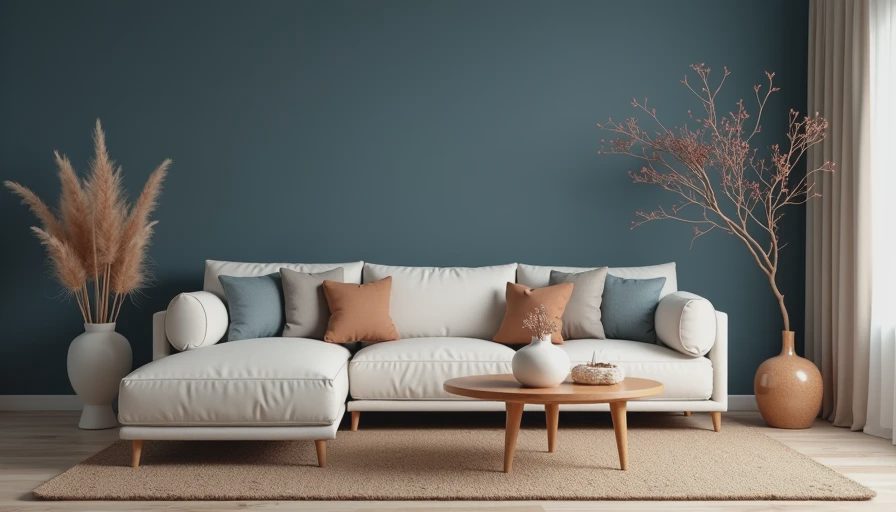
Next, create variation in height and texture. A low stack of books beside a tall branch gives the eye somewhere to move. A rough vessel beside a smooth wall creates contrast without requiring a bold pattern. Keep the palette connected through warm neutrals, muted green, clay, charcoal, or faded blue, but do not treat color variation as a problem.
The strongest wabi sabi home decor often includes something ordinary: a repaired chair, a postcard, a thrifted pitcher, or a table inherited from a relative. Sentimental objects become more meaningful when they are not crowded by twenty decorative substitutes.
Choosing imperfect pieces that will last
Not every irregular object is well made. “Handmade” is not automatically a reason to buy, and a distressed finish can be manufactured to look old without becoming more useful. Before bringing something home, ask three practical questions: Will I use it? Can it be repaired or maintained? Will I still appreciate its shape when the trend passes?
Look closely at construction. On a wooden piece, check whether the joints feel sound and whether the surface can be refinished. With ceramics, inspect the foot, rim, and glaze for cracks that could spread. For textiles, consider whether the fabric can be washed and whether its weight suits the season. The small flaws worth living with are usually the ones that do not interfere with function.
A good example is a slightly uneven stoneware mug that costs $28 and becomes your daily favorite. A weaker purchase is a $90 “rustic” sign that only fills an empty wall. One enters your routine; the other asks you to invent a reason for it.
A simple wabi sabi home decor reset
Try this one-hour reset rather than redecorating an entire room. First, open a window and clear one visible area. Second, place useful items where your hands naturally look for them. Third, gather objects that are damaged, duplicated, or never used. Set them aside for repair, donation, or recycling.
Then choose one anchor piece: a wooden chair, a low lamp, a woven basket, or a ceramic vessel. Build around its texture instead of matching its color exactly. Leave at least one surface partly clear. Negative space is not wasted space; it gives the objects you kept enough attention to be seen.
Finally, live with the room before purchasing anything. Notice where the light falls in the morning, where clutter returns, and which object you keep moving out of the way. Those observations are better design information than an inspiration board. Wabi sabi home decor should support the way you actually live, including the imperfect parts.
What is worth bringing home
My edit is intentionally short: one object that serves a daily ritual, one material that will age well, and one personal piece that cannot be replaced by a trend. That might be a tea bowl, a solid wood stool, and a framed note from someone you love. It might be completely different in your home.
The point is not to make every room look Japanese, rustic, or minimal. It is to stop asking a room to prove that you have good taste. Let it show that you cook, read, rest, repair, host, and remember. Wabi sabi home decor offers a gentler standard: useful objects, honest materials, and enough space for life to leave its mark.
A home becomes quieter not when nothing is visible, but when what is visible has earned its place. Start with one surface. Keep the piece you reach for. Let the rest wait. Give less. Mean more.
Comments
No comments yet — be the first to share a thought.