

Tatami mat floor sleeping benefits for minimalist lifestyle: a quieter way to rest
Tatami mat floor sleeping benefits for minimalist lifestyle explained: discover calmer rooms, flexible bedding, comfort, care, and simpler living.
The appeal of tatami mat floor sleeping benefits for minimalist lifestyle is not really about owning a beautiful mat. It is about changing the relationship between a room and the person who uses it. A bed takes up space all day. A floor sleeping setup can be folded, aired, and put away, leaving the room available for reading, stretching, guests, or simply breathing. That does not make floor sleeping right for everyone, but it does make the idea worth considering if your home feels crowded by furniture.
Why tatami suits a less crowded home
Traditional tatami is made with a woven grass surface over a structured core, although contemporary versions often use rush, paper, foam, or synthetic materials. Its proportions are calm and architectural. Several mats can define a sleeping area without a permanent bed frame, and one mat can give a small studio a clear visual center.
The first of the tatami mat floor sleeping benefits for minimalist lifestyle is flexibility. In the morning, fold or roll the futon, open a window, and let the sleeping surface breathe. The room becomes available again. In an 800-square-foot apartment, that can mean the difference between a bedroom that performs one task and a room that supports several parts of daily life.
There is also a useful visual restraint. Tatami does not ask for a headboard, matching nightstands, decorative pillows, or a storage bench. Pair it with a cotton shikibuton, a thin wool pad, and one washable blanket, and the arrangement feels intentional rather than unfinished. The goal is not to imitate a photograph of a Japanese room. It is to keep only what supports sleep.
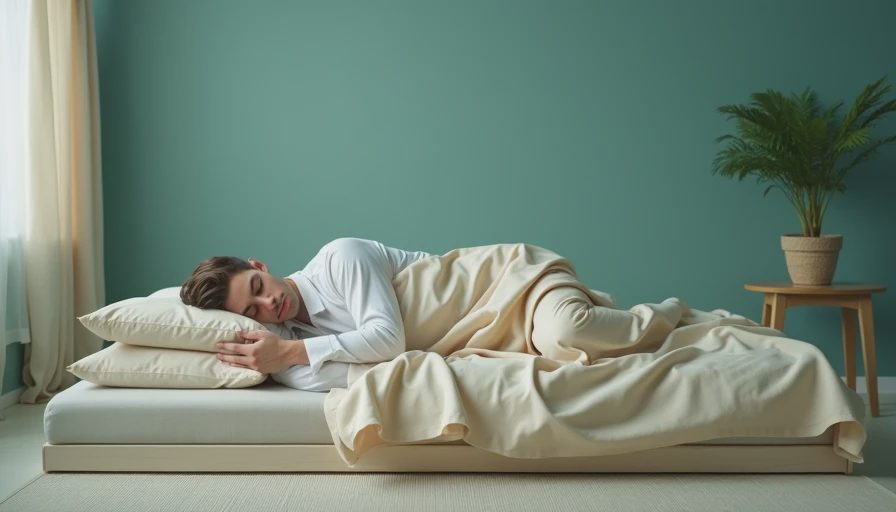
What floor sleeping changes physically
A firm surface can feel supportive to some sleepers, particularly people who dislike the sinking sensation of a plush mattress. The stable base makes turning and getting up feel straightforward. A thin futon also creates less separation from the floor, which some people describe as grounding or reassuring. Those are personal experiences, not guarantees of better sleep.
The tatami mat floor sleeping benefits for minimalist lifestyle also include a different kind of temperature experience. Tatami and natural-fiber bedding can feel less insulated and less enveloping than a tall mattress, which some sleepers appreciate in a warm bedroom. In colder months, place a rug or insulated underlay beneath the mat, and use a wool layer above the futon rather than adding a thick mattress that defeats the purpose.
There are real cautions. A floor setup can be difficult for anyone with knee, hip, or back pain, limited mobility, allergies, or sensitivity to dust. Getting down and standing up repeatedly is not a design detail; it is part of the daily task. If you have a medical condition affecting sleep or movement, ask a qualified clinician before making a major change. A low platform or firm mattress may offer the same visual quiet with less strain.
Building a simple setup that lasts
Start with measurements, not shopping. A full-size futon is roughly 54 by 75 inches, while a queen is about 60 by 80 inches. Add walking clearance, space to open a closet, and enough room to air the bedding. Tape the footprint on the floor for a week. This small test is more useful than imagining how a room might look after delivery.
For the tatami mat floor sleeping benefits for minimalist lifestyle to be practical, ventilation matters. Place mats on a dry, level surface and lift the futon regularly. In humid climates, a breathable underlay can improve air circulation. Avoid trapping damp bedding between a mat and a wall. Vacuum or sweep the surface according to the maker's instructions, wipe spills promptly, and never saturate natural-fiber tatami with water.
Choose materials according to the life you actually lead. A traditional rush surface can bring a gentle grassy scent and a more tactile feel, while synthetic tatami may be easier to clean and less vulnerable to moisture. Brands such as IKEHIKO and FULI offer different approaches to Japanese-style floor bedding, but the label matters less than construction, dimensions, repairability, and a clear return policy.
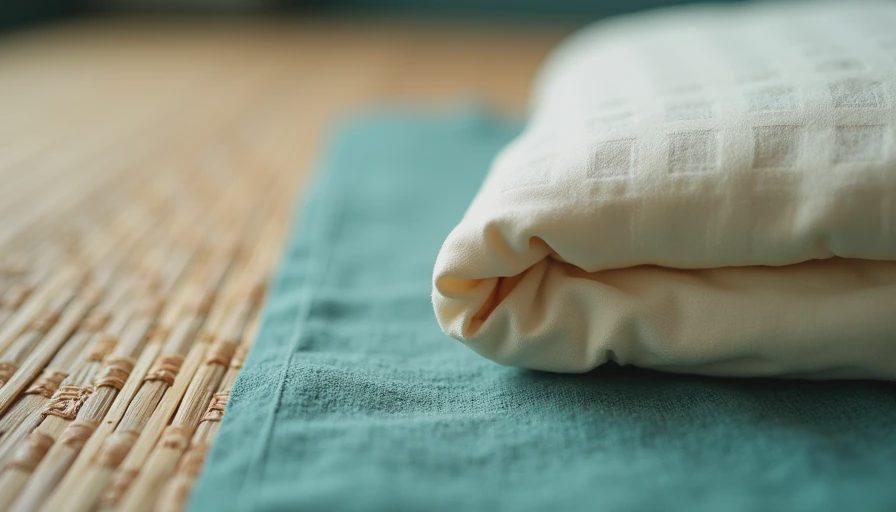
The minimalist benefit is the daily ritual
The strongest tatami mat floor sleeping benefits for minimalist lifestyle may be behavioral rather than physical. A bed that must be folded asks for a small morning decision: make the room ready for the next part of the day. That ritual can prevent bedding from becoming a permanent landscape of laundry, laptops, and unopened books.
It can also clarify consumption. Once you see that a sleeping space needs a mat, a futon, a cover, and somewhere to air them, decorative extras become easier to question. You might skip the bulky bed frame, the under-bed storage boxes, and the matching bedroom set. This is not deprivation. It is a shorter chain between the activity and the objects that support it.
The ritual should remain gentle. If folding the futon every morning creates resentment, the setup is not serving you. Minimalism is not a performance of discipline. It is a way to make ordinary life less crowded, and that includes leaving enough ease for tired mornings.
A careful seven-day trial
Before committing, try the arrangement for one week. Borrow or use an existing firm pad if possible, and keep the experiment specific. On the first day, measure the room and inspect the floor for cold spots or moisture. On the second, sleep on the setup with your usual pillow. During the week, note how easily you get up, whether your shoulders or hips feel sore, and how long it takes to air and store the bedding.
Notice practical details that photographs hide. Does the futon fit in the closet? Can you carry it without help? Does the mat slide on hardwood? Does the room become too cold at night? If you share the space, does one person love the low profile while the other misses a raised bed? These answers are more important than a beautifully edited image.
A useful compromise is to keep the tatami in one room and retain a conventional bed elsewhere, especially during a transition. You can also choose a low platform with a rollable futon. The point is to reduce visual and physical excess, not to win an argument with your furniture.
What is worth keeping
The tatami mat floor sleeping benefits for minimalist lifestyle become meaningful when the object earns its place every day. Look for a mat that lies flat, has reinforced edges, resists slipping, and comes in a size you can handle. Ask how it should be cleaned and stored. Natural materials can age beautifully, but only when they are cared for; a neglected damp mat is not a sustainable purchase.
Budget roughly $100 to $250 for a basic single or twin-style mat, $200 to $600 for a larger or more substantial configuration, and additional money for a quality shikibuton, cover, and moisture-control layer. Prices vary widely by materials and construction. Spend first on the sleeping surface and ventilation, not on accessories that make the room look complete.
The quietest setup is often the one you stop noticing. In the morning, the room opens. At night, it becomes a place to rest without a permanent monument to rest taking over the space. That is the heart of tatami mat floor sleeping benefits for minimalist lifestyle: fewer objects, more usable room, and a daily rhythm shaped by intention rather than accumulation.
Give less. Mean more.
Comments
No comments yet — be the first to share a thought.