
How to Choose an Authentic Japanese Tatami Mat for Under Futon Bedding
Authentic Japanese tatami mat for under futon bedding: learn what to look for, how to care for it, and whether this quiet foundation suits your room.
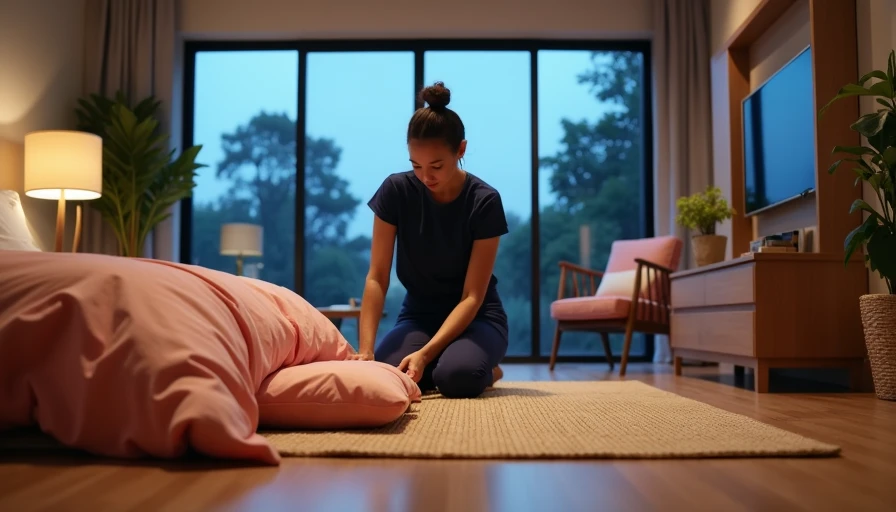
An authentic Japanese tatami mat for under futon bedding is a quiet piece of architecture, not simply a padded layer between you and the floor. It changes how a room feels at night: lower, calmer, less crowded. I have always liked objects that earn their space through daily use, and a well-made tatami foundation does exactly that. It supports a shikibuton, gives the body a little separation from a hard floor, and creates a defined sleeping area without adding a bulky bed frame.
The phrase authentic matters, though. Many products use a tatami-inspired pattern while substituting plastic, foam, or loosely woven fabric for traditional materials. Those alternatives can be perfectly practical, but they are not the same object. If you are buying one as a thoughtful housewarming gift, a bedroom reset, or a more intentional way to sleep, material honesty is worth investigating.
What makes an authentic tatami mat different
Traditional tatami is built around a dense core and a woven surface. Historically, the core was made from compressed rice straw, while contemporary mats often use wood fiber or other manufactured boards for consistency and pest resistance. The surface, called omote, is traditionally woven from rush grass. It has a fresh, dry scent and a texture that feels firm beneath the hand rather than springy like a foam camping mat.
An authentic Japanese tatami mat for under futon bedding should feel stable when you kneel on it. It should not fold like a yoga mat or collapse noticeably under a concentrated load. Traditional proportions also matter. Standard Japanese tatami sizes differ by region, so a seller should state the finished dimensions rather than simply calling a mat full-size or queen-size. Two or more mats may be needed beneath a western futon, and the seams should sit flat without creating an uncomfortable ridge.
Look for a clear materials statement, finished thickness, country of manufacture, and instructions for ventilation. A product that only says “Japanese-style” is telling you something useful: it may offer the look without the construction. That is not automatically a reason to reject it, but it is a reason to compare prices honestly. A $90 decorative mat and a $250 to $500 traditional-style sleeping foundation are serving different purposes.
Choosing the right foundation for your room
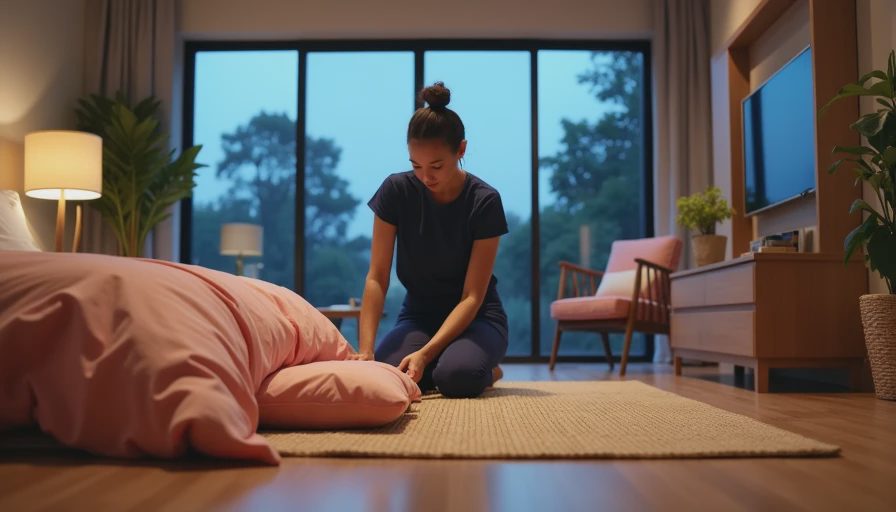
Before ordering an authentic Japanese tatami mat for under futon bedding, measure the sleeping area with painter’s tape. Leave enough room to walk around the futon and lift it during the day. In a small apartment, two mats arranged side by side can define the bed zone while preserving more open floor than a platform frame. In a larger bedroom, several mats may create a generous rectangle, but the arrangement should still be easy to air out and move.
Thickness is a practical decision. A thinner mat keeps the floor feeling close and is easier to carry upstairs. A thicker mat offers more separation from a cold floor and can feel more substantial under a firm shikibuton. Neither choice turns tatami into a mattress; the futon provides most of the cushioning. If you sleep on your side or have sensitive joints, test the combination before committing to a complete bedroom change.
Also consider the floor beneath it. Hardwood, laminate, and tile can all work, but moisture management becomes more important on a slab floor or in a humid room. A breathable layer may help, while an impermeable plastic sheet can trap condensation. The goal is not to seal the mat from the room. It is to let air circulate around it.
How to care for tatami beneath a futon
The most important habit is lifting the futon regularly. Fold or stand the bedding so the mat can release moisture, especially after a warm night. Open a window when weather allows, and use a fan if the room is still. This simple ritual takes a few minutes and does more for longevity than an elaborate cleaning routine.
Vacuum with a soft attachment or sweep gently in the direction of the weave. Avoid soaking the surface. For a small spill, blot immediately with a dry or barely damp cloth, then allow the area to dry completely. Strong detergents can discolor rush grass and leave a smell that is difficult to remove. Natural tatami gradually changes color from green to a warm straw tone; that shift is normal and often beautiful.
Inspect the underside every few weeks during the first season. Look for trapped dust, dampness, or a musty odor. If you see moisture, move the mat to a dry, shaded place and let both sides breathe. Direct, intense sun can dry and fade the surface unevenly. In homes with pets, keep claws trimmed and place a washable runner nearby rather than covering the entire mat with a dense rug.

Is it a meaningful gift?
An authentic Japanese tatami mat for under futon bedding is a good gift when the recipient values a calmer room and has enough floor space to use it properly. It is less suitable for someone who wants instant convenience, dislikes floor sleeping, or lives in a damp basement where daily ventilation is difficult. The object asks for a small amount of participation. That is part of its charm, but it should never be hidden from the person receiving it.
For a gift, I would choose one well-documented mat rather than a bundle of accessories. Confirm the recipient’s mattress dimensions, doorway width, storage habits, and flooring first. A simple note explaining how to air the futon can be more useful than decorative packaging. If traditional rush is not practical, a high-quality synthetic alternative can still be an honest choice when it is labeled clearly and selected for easy cleaning.
The best gifts do not create a new category of household maintenance without permission. They make an existing wish easier to live with. If your recipient has already mentioned a shikibuton, Japanese interiors, or wanting to remove a bulky bed frame, this foundation could be exactly right.
A quieter way to build the bedroom
An authentic Japanese tatami mat for under futon bedding is not a shortcut to luxury. It is a durable, tactile base that rewards attention: measure carefully, buy from a transparent seller, air the bedding, and clean with restraint. In return, it can make a bedroom feel more spacious and intentional without adding another heavy piece of furniture.
That is why I like it as both an object and a gift. It does not ask to be admired from across the room. It simply supports the hours when the room is dark, the futon is ready, and everything unnecessary has been moved aside. Give less. Mean more.
Comments
No comments yet — be the first to share a thought.